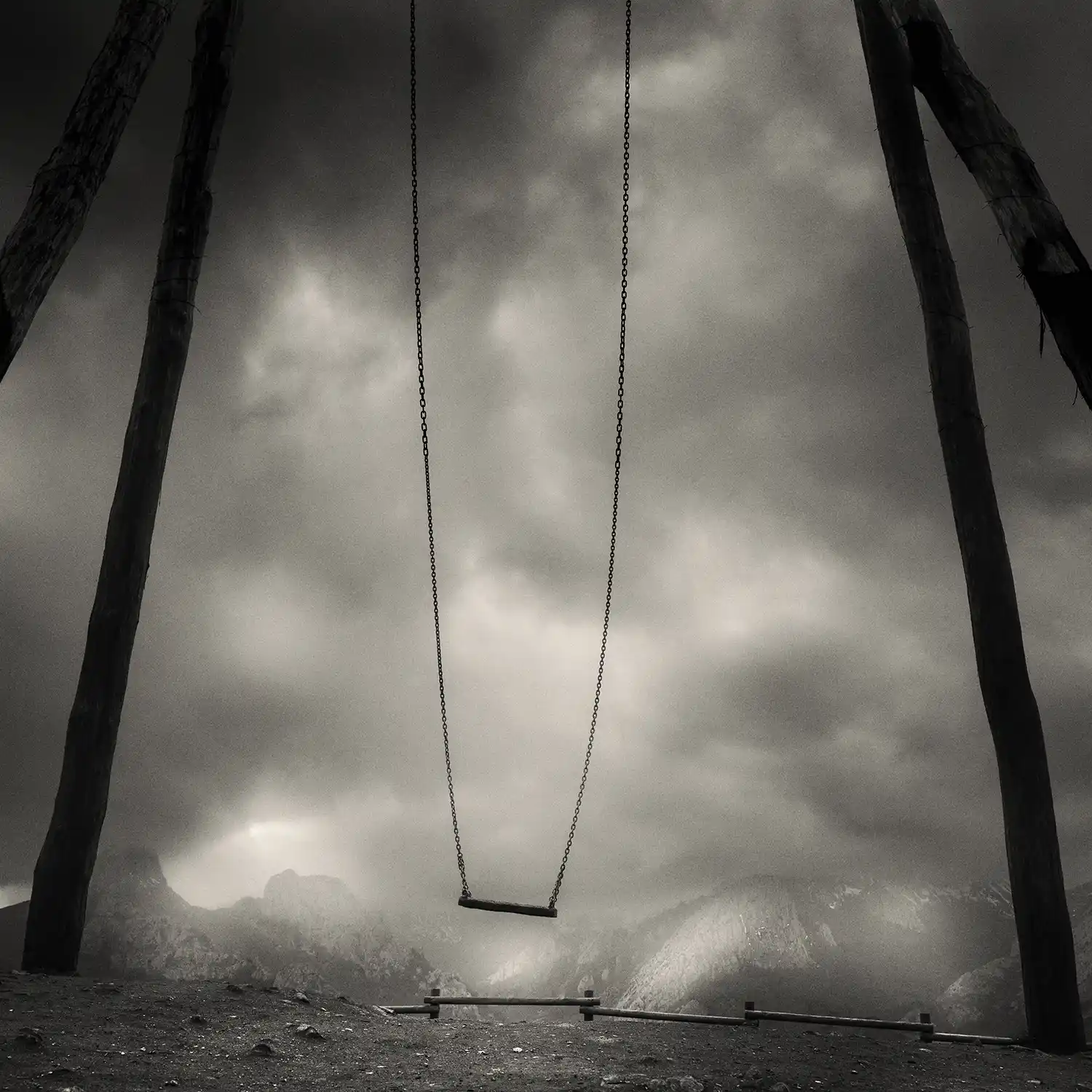
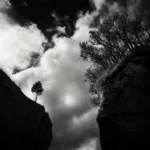
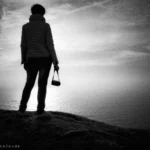
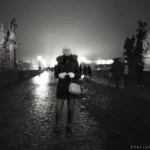
«Actually, I prefer black and white. It’s not that I don’t take color photographs, but I’ve realized one thing: color doesn’t quite fit in my world. Black and white gives me a sense of distance—a kind of distance from real life. I believe that distance is very important. Real life is full of color. Black and white offers a sense of detachment. It allows the audience and viewers to find their own answers and provides the space and depth to reflect on and contemplate my ideas.»
Fan Ho
That word—distance—is key
When I heard these words from Fan Ho, I had the feeling that someone had put into order something I had been sensing, photographing, and even avoiding explaining for years. That idea of distance—stepping slightly away from real life to be able to see it—not only defines his approach to photography, but also explains why black and white remains, for me, such a natural and inevitable choice.
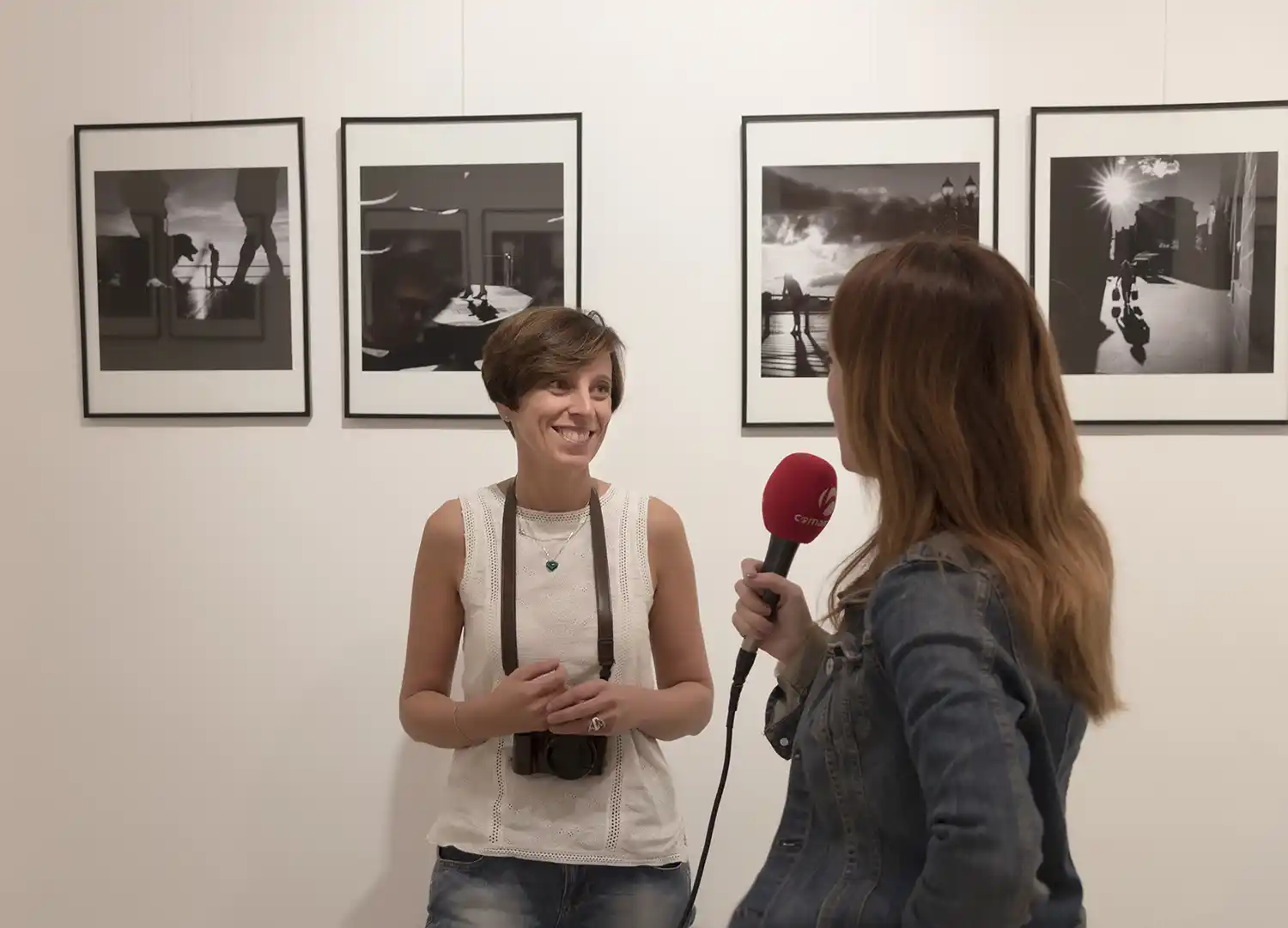
Interview with Mónica Riveiro on the occasion of her black-and-white photography exhibition 'Eternal Present'
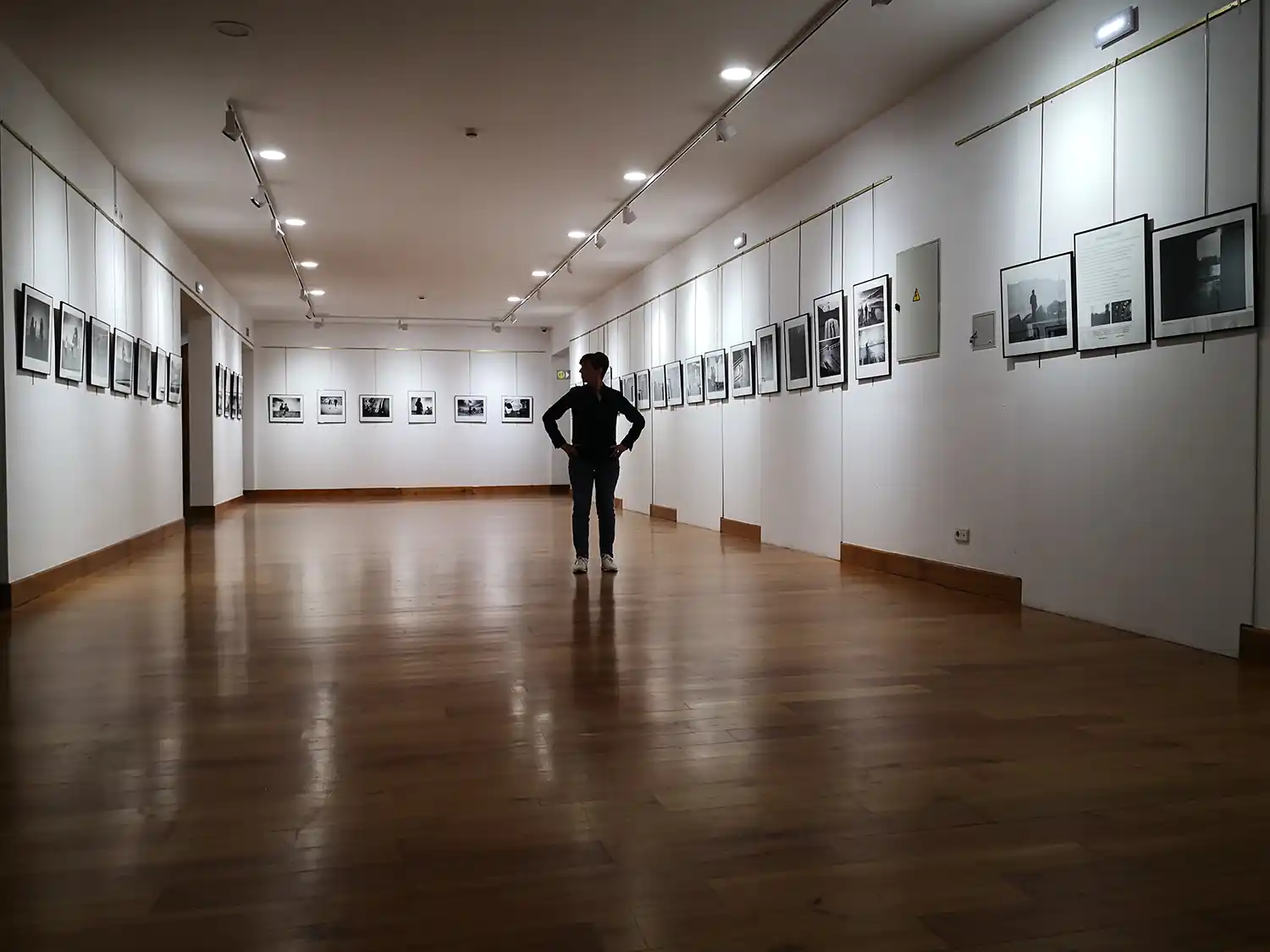
Black-and-White Photography Exhibition by Mónica Riveiro and Carlos Conde: "Tales of Liquerique"
In the midst of the era of saturated, vibrant, and eye-catching color (that color that seems to scream look at me! all the time), it can seem a bit unusual to fill a website or social media with grayscale photographs.
Some people find it sad. To others, vintage (which, interestingly, is now considered modern). "To others, poetic.
And there are always those who try to psychoanalyze you based on the range of grays you use, as if that held the key to everything.
My short answer would be: «just because».
But since one doesn’t always want to go through life seeming rude, I have a more honest answer. And, I warn you, quite a bit longer.
Real life is multicolored, chaotic, and noisy.
Black and white, on the other hand, introduces a slight distance—the right amount to observe without being swept away by what we see. In that space, the important things happen: contemplation, reflection, and the possibility for each viewer to find their own interpretation.
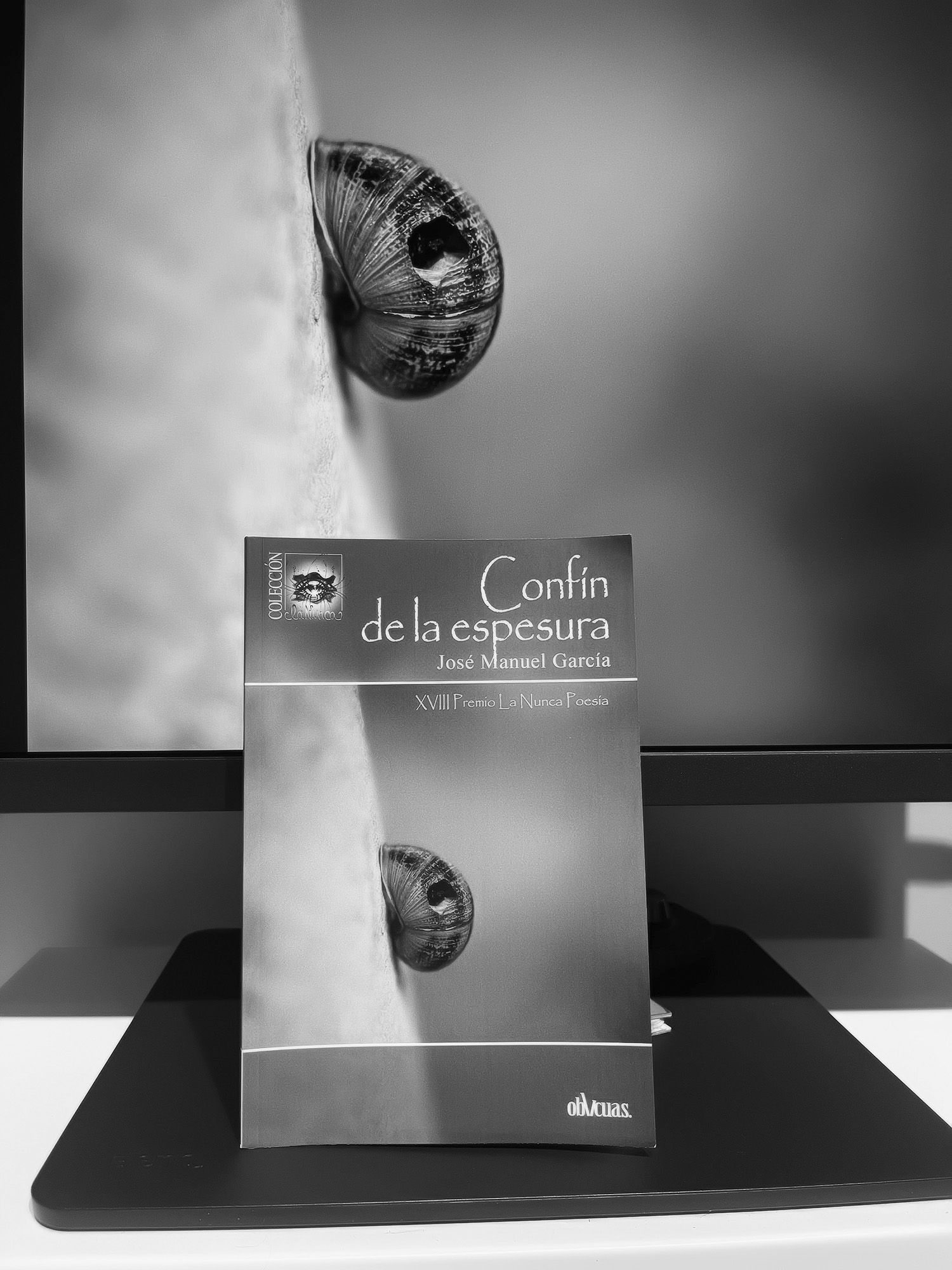
Cover of Juan Manuel García’s poetry book, featuring black-and-white photography by Mónica Riveiro.
How I Discovered Black and White Without Looking for It
I came to black and white by accident. And, as often happens with important things, once I had caught it, I didn’t want to let it go.
At first, it was the fascination with the darkroom: developing my own rolls, choosing films, developers, papers, filters. The slow and patient magic of the enlarger. Trial and error.
The baryta papers.
Those blacks.
Those whites.
Color was there, of course. I even went so far as to have equipment for color developing and printing. But black and white was always too tempting. When I photographed in color—often with the legendary Fujifilm Velvia— I felt that what I was communicating had nothing to do with who I was when photographing in black and white. It was as if I had to switch mental gears depending on the film I loaded into the camera. And that switch didn’t flow naturally.
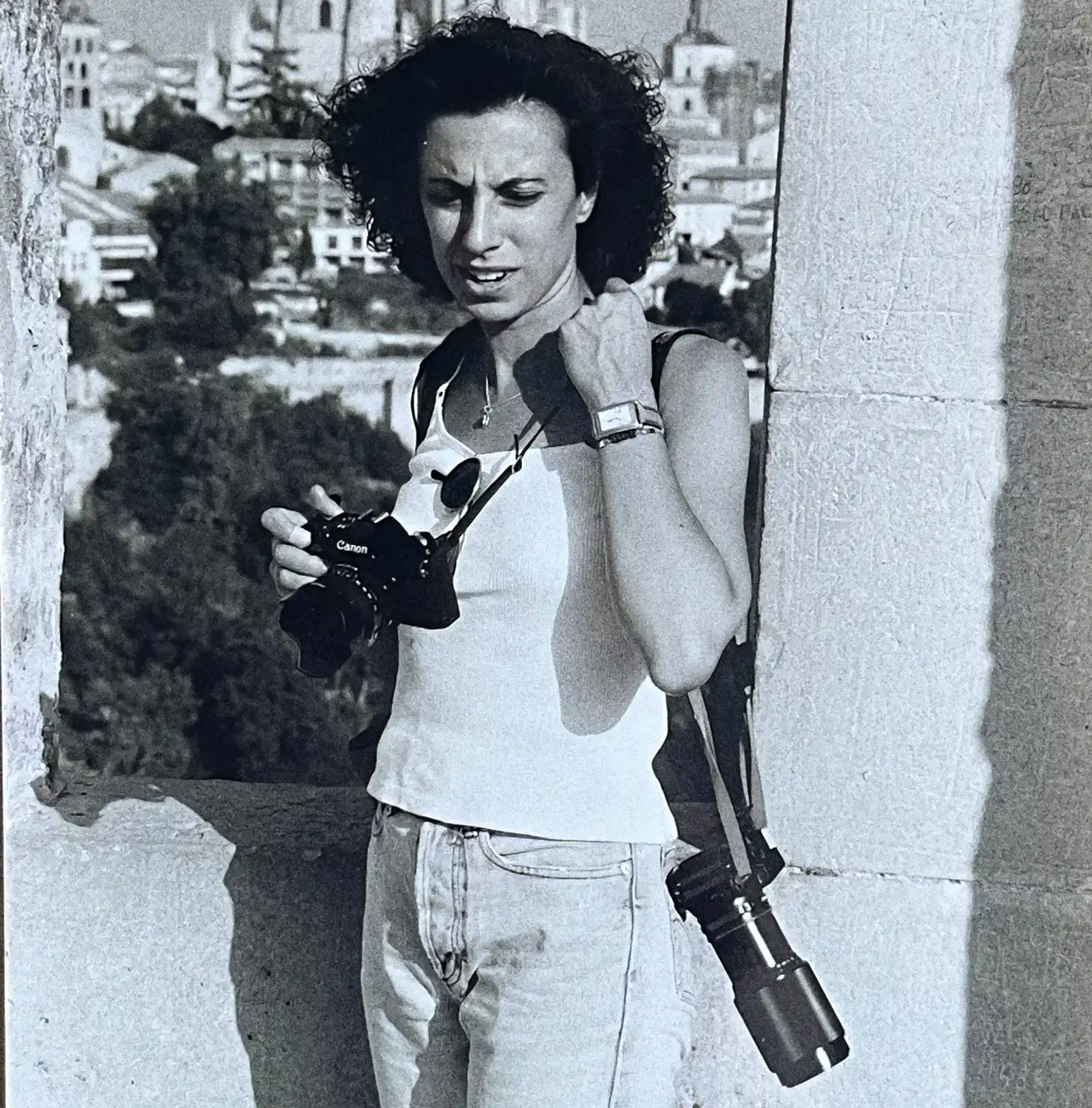
For a time, I traveled with two Canon A-1 cameras: one loaded with color film and the other with black and white.
The result? A jumble. Neither one nor the other. It wasn’t me. Although sometimes it did work out. So I chose, and I stayed.
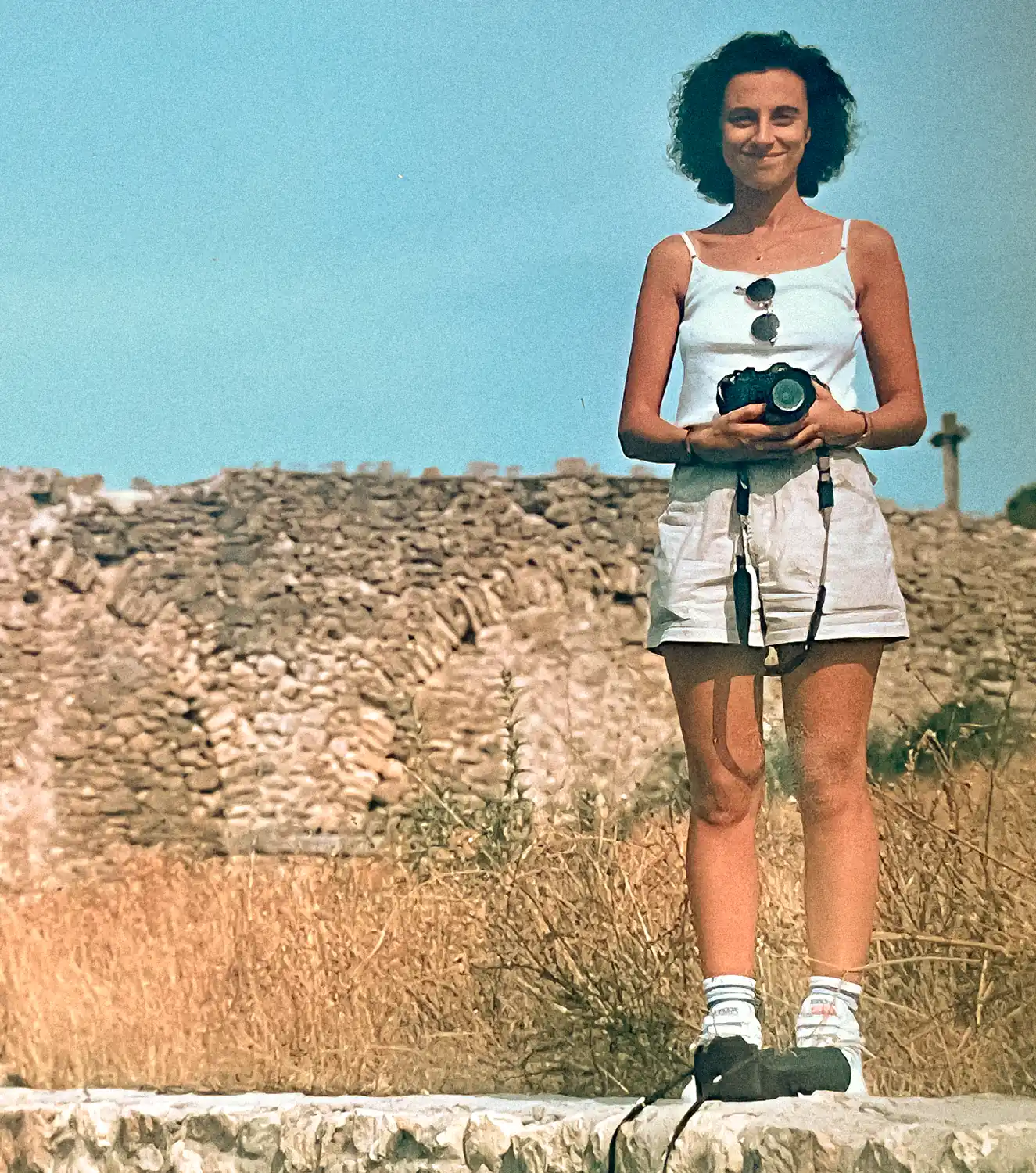
Mónica Riveiro with two cameras around her neck, one loaded with black-and-white film and the other with color film.
Well yes, there they were again—the two inseparable Canon A-1s.
Black and White as a Way of Seeing
What black and white gives me, color rarely does. Not because color is inferior, but because it doesn’t fit with the way I see. As Fan Ho says, it doesn’t fit in my world.
We see the world in color every day. For me, it holds no mystery. Black and white, on the other hand, introduces dreaminess. Mystery. Depth. Because we don’t see that way. Because it’s a translation, not a copy of reality. Or perhaps a very personal interpretation.
Do I enjoy a beautiful sunset with spectacular colors? Of course. But I prefer to simply contemplate it… or take a photo with my phone and keep walking.
What interests me to photograph lies elsewhere: it’s more internal, more introspective, more personal.
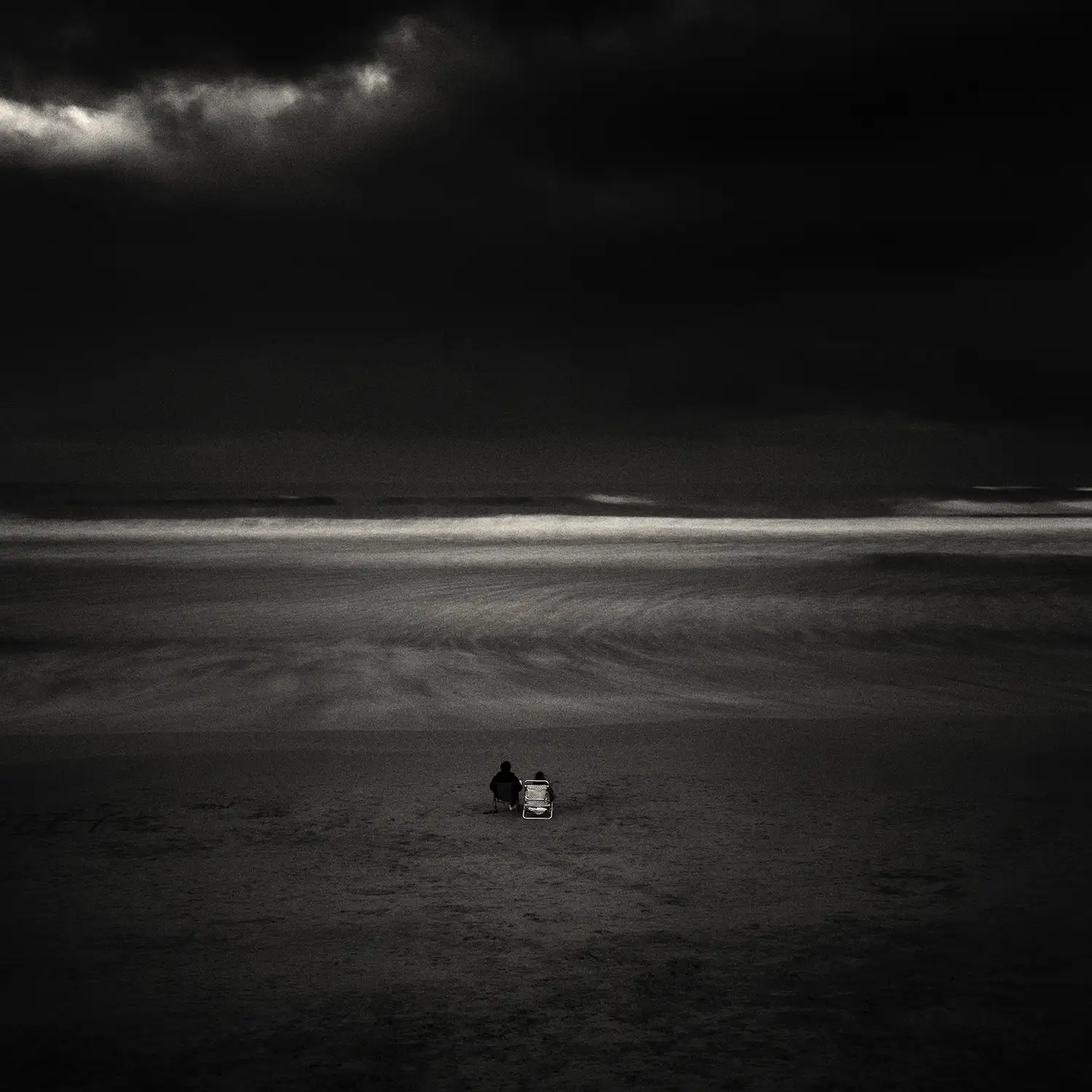
Watching the sea without the need for color.
Black and white as an introspective way of seeing the world
When I photograph in black and white, something takes me into a kind of internal meditation. Like putting earplugs in and listening only to your breath and the beat of your heart.
The world stands still.
Time stretches.
I lose track of the hours.
With color, the exact opposite happens. My mind becomes too active. It scatters. It gets stressed.
To Deepen, Not Simplify
Black and white doesn’t simplify by removing color.
It deepens.
It silences distractions.
It directs the gaze where I want it to go, not where color dictates. When color disappears, a new world—imagined or fictitious—appears, along with a completely different interpretation.
I seek mystery. Dreaminess. What isn’t seen at first glance.
Black and white deepens when color is removed.
Introspection
The emotions I convey are my own. I photograph because something moves me, and that is exactly what I want to show: my dreams, my fears, my desires.
My images don’t speak of others.
They speak of me.
That is why black and white is, today, my signature style. I don’t know if it will change in the future. I’m not sure. What I do know is that right now it is the most honest way I have to tell my stories and to delve into myself.
As Fan Ho said, black and white «offers the space and depth to reflect on and contemplate my ideas». And in that space—quiet, slow, and full of grays—is where I feel most at ease.
And in that space—quiet, slow, and full of grays—is where I feel most at ease.

 Mónica Riveiro